Engineering
Why asphalt fails early — and how good practice prevents it
Ruts, cracks and potholes rarely start at the surface. Most early failures trace back to the base, the drainage or the compaction.
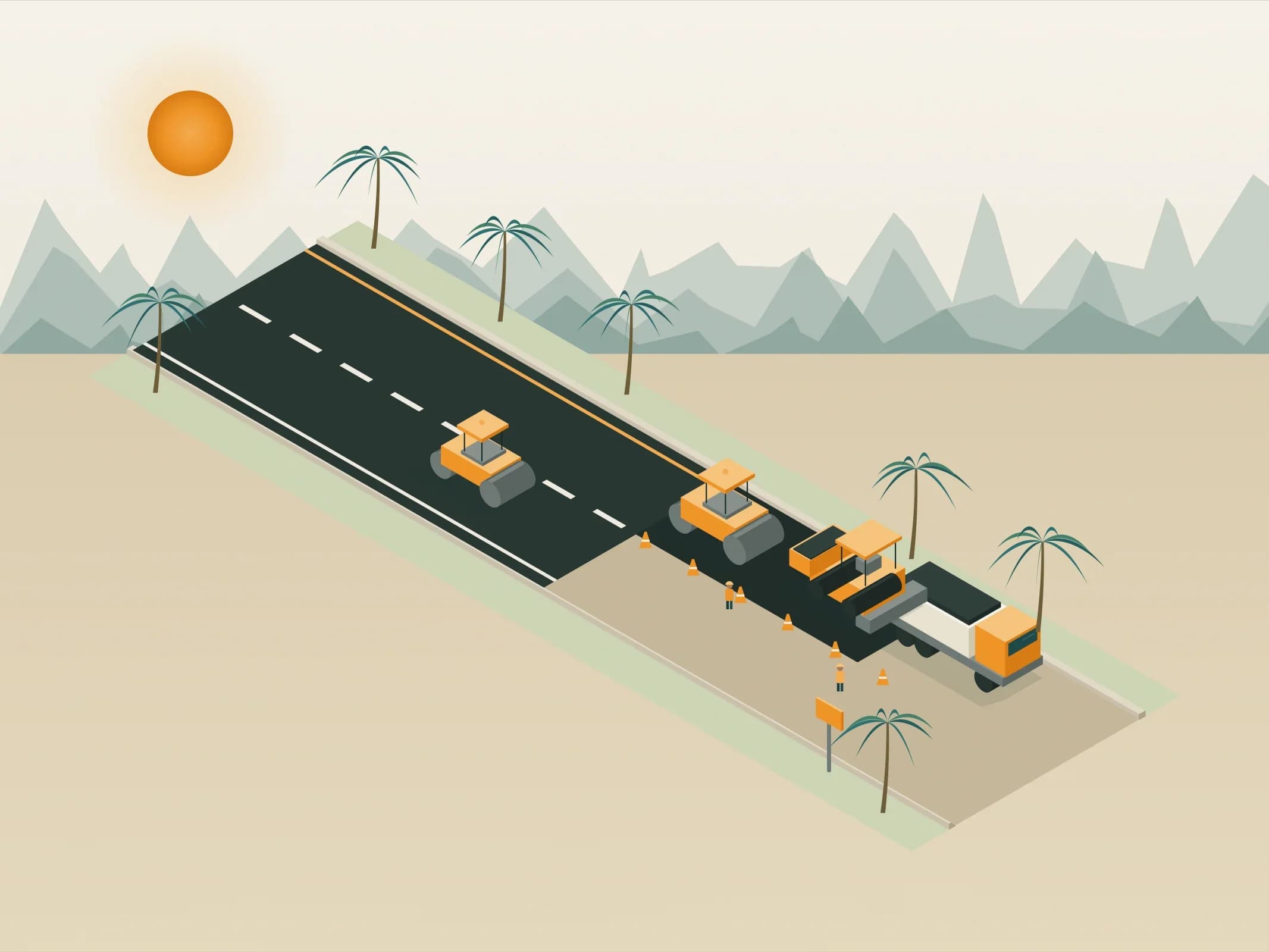
A new road or car park should look the same years after it opens. When it doesn't, the cause is rarely the asphalt alone. Here are the usual suspects — and what good practice looks like.
A weak base
Asphalt is a wearing surface; the strength comes from the layers below. If the subgrade is not levelled, watered and compacted properly, and the base course is too thin, the surface will deform under traffic. Levelling and base preparation deserve as much attention as the paving itself.
Water with nowhere to go
Water is asphalt's enemy. Correct falls, kerbs and drainage outlets keep water off the pavement and out of the base. In Oman, short intense rains can do serious damage to a road that has no designed way to shed water.
Temperature and compaction
Asphalt must be laid and rolled within its temperature window. In summer the mix stays workable longer, but rolling still needs to follow the paver closely; in cooler weather the window is shorter. Under-compacted asphalt has too many air voids, lets water in and ages fast.
Heat-resistant binder
Surface temperatures in an Omani summer can far exceed air temperature. Specifying a binder grade suited to local heat reduces rutting where vehicles brake, turn or park.
Joints and edges
Cold joints between paving runs and unsupported edges are where cracks begin. Planning paving widths, cutting back joints and supporting edges with kerbs makes a long-lasting difference.
Asphalt, levelling and landscaping are part of the Lotus scope — so the road outside your building is built with the same care as the building itself.
Share your drawings, BOQ or just an idea. We'll study the scope and prepare a clear, competitive proposal.
Request a quote